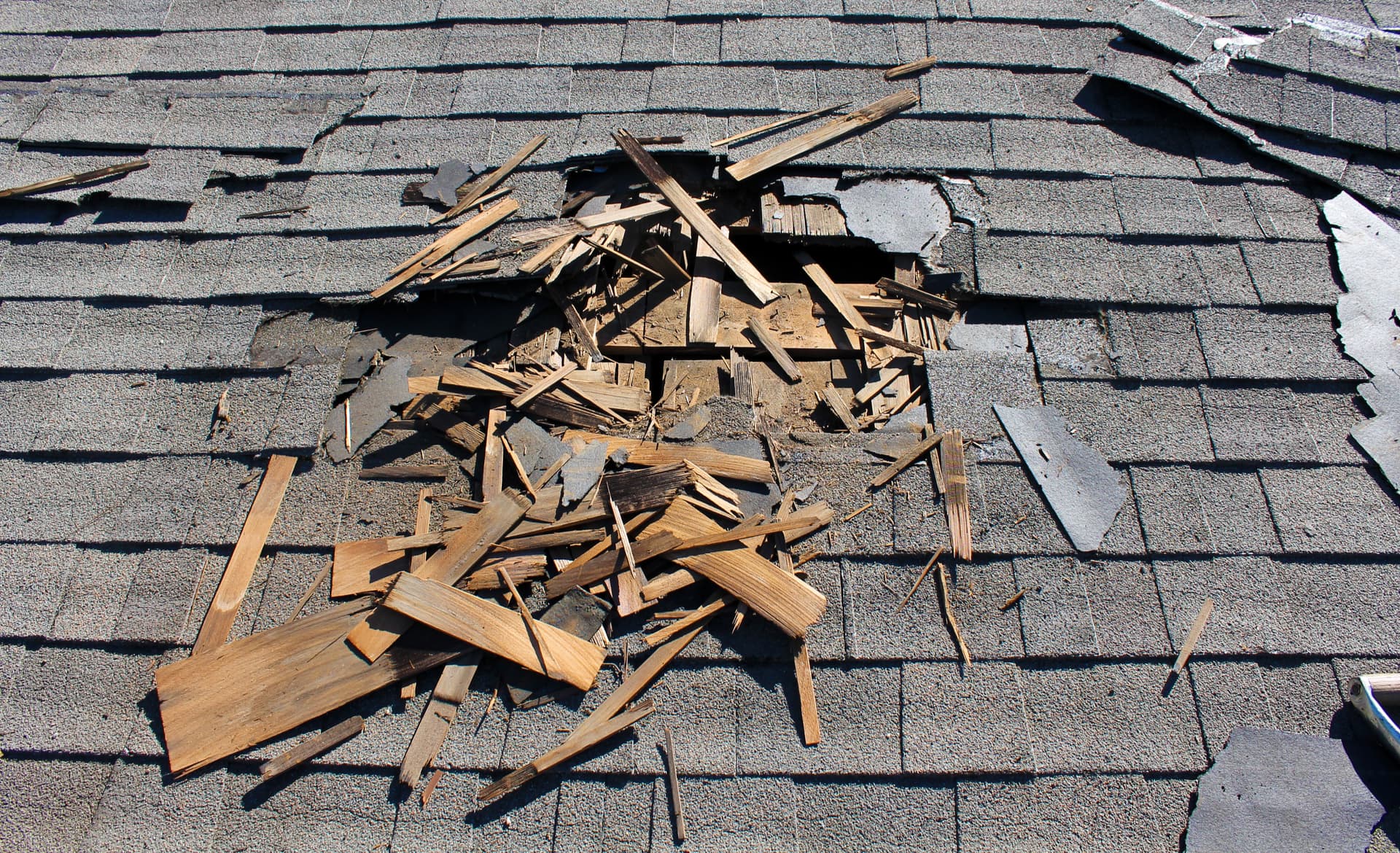
What Storm Season Does to the Ground Around Your Roof
Runoff, slabs, and storm drainage — the other half of hurricane prep
When West Palm Beach homeowners think about hurricane season, they look up. The roof gets the inspection, the shutters go on the windows, and the yard gets cleared. But the same storms that batter your shingles are working on everything below the roofline too — and the ground around your home takes more punishment than most people realize.
Where all that water actually goes
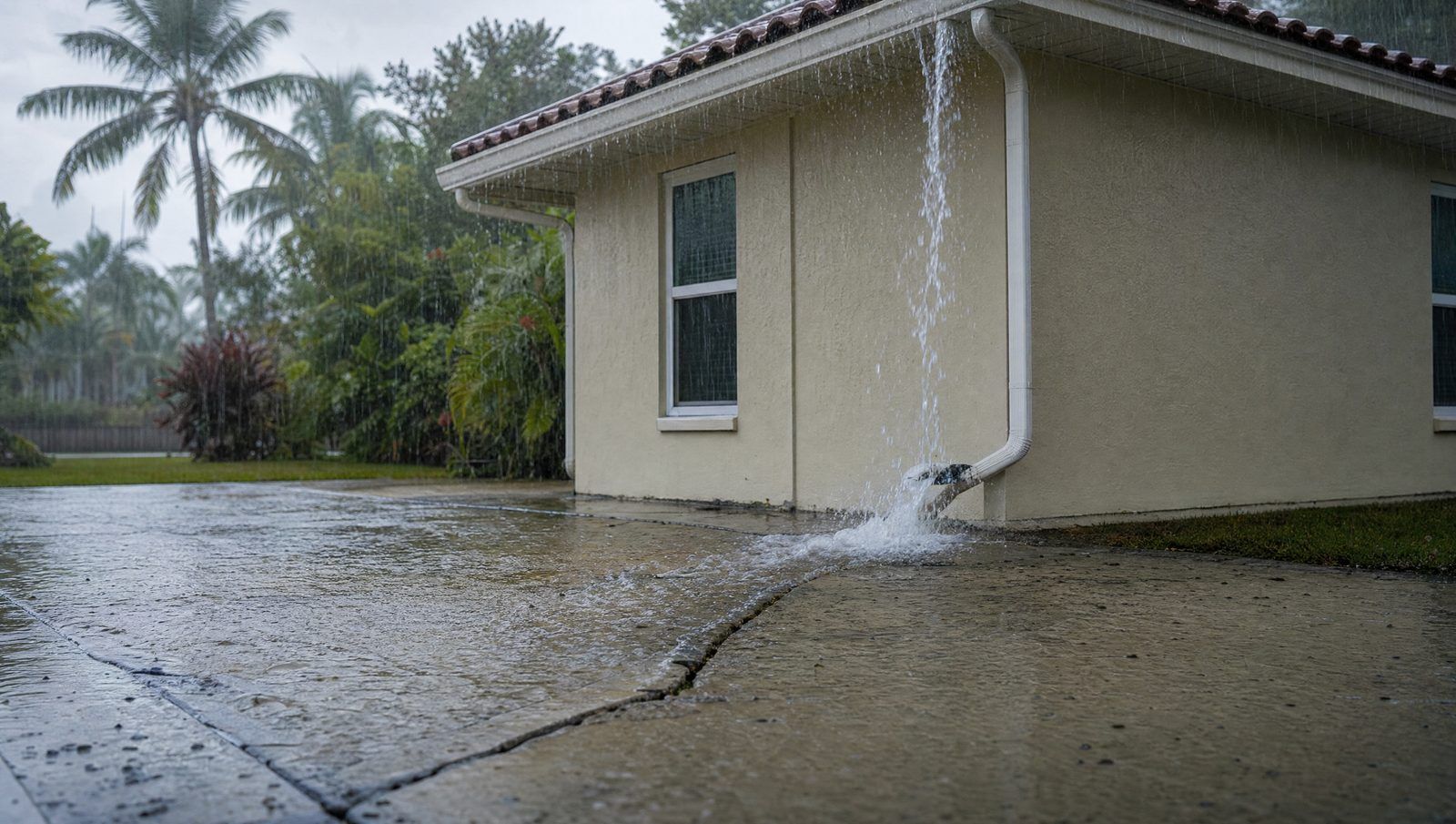
Every inch of rain that hits your roof has to go somewhere. On a typical South Florida home, a single summer downpour can send well over a thousand gallons of water off the roof and into your gutters, downspouts, and — if any of those are compromised — straight onto the concrete around your foundation.
Over a few seasons, that constant cycle of soaking and drying does real damage: driveways crack and settle, walkway slabs tilt, pool decks develop low spots that hold water, and soil washes out from under patio corners.
The roofing side of a concrete problem
We see this all the time. A clogged gutter or a damaged drip edge doesn’t just risk a leak at the fascia — it changes where water lands, and concentrated runoff is exactly what concrete and the soil under it can’t handle.
If you’ve noticed new cracks in the driveway or a slab that’s started to pitch toward the house, the roof drainage above it is one of the first things worth checking.
Same storm, different trade
This isn’t just a Florida story, either. Gulf Coast homes from here to Texas fight the same battle with heavy rain, saturated soil, and storm-driven erosion. A good concrete contractor in Lake Charles deals with the identical problem set — slabs undermined by runoff, settling from soaked soils, and storm repairs that have to be built for the next storm, not just the last one.
Different trade, same enemy: water that ends up where it shouldn’t.
What to check before the next system
Walk the perimeter after a hard rain and note where water pools against concrete. Make sure downspouts discharge at least a few feet from slabs and the foundation. Keep gutters clear so water goes where the system was designed to send it.
And if a slab near the house has visibly moved, get both the drainage and the concrete looked at — fixing one without the other usually means doing the job twice.
Your roof and the ground around your home are one system when it rains. Treat them that way and both last longer.